

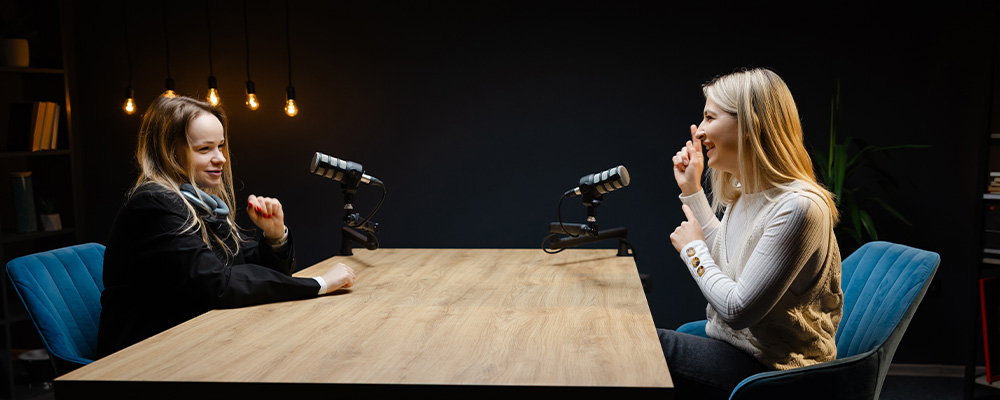
Double-ender recording is one of the most important concepts in modern podcasting and remote production.
It is also one of the most misunderstood.
If you have ever recorded a remote episode that sounded fine during the conversation but fell apart in editing, chances are the issue was not your mic, your guest, or your setup. It was the recording method.
This article explains what double-ender recording is, how it works, and why professionals rely on it for reliable, studio-quality results.
What Is Double-Ender Recording?
Double-ender recording means each participant is recorded locally on their own device.
Instead of streaming everyone’s audio and video to a central server to be recorded, each person captures their own full-quality file at the source. Those files are then combined into a single session after recording.
This approach removes the internet from the critical recording path.
How Double-Ender Recording Works
In a double-ender workflow, recording and connection are treated as separate processes.
- Each participant records audio and video locally on their device
- Files are saved in full resolution without real-time compression
- Uploading happens in parallel or after recording
- Individual files are combined into a finished session
Because capture does not depend on live internet quality, short connection drops do not affect the recorded files.
Why Streaming-Based Recording Falls Short
Many remote recording tools capture audio and video through the internet.
This means:
- Audio is compressed to fit available bandwidth
- Quality fluctuates as connections fluctuate
- Dropouts and artifacts become part of the final file
- Problems are often discovered only in post-production
Even on fast connections, internet quality changes constantly. When recording depends on streaming, those fluctuations are permanently baked into the recording.
Double-ender recording avoids this entirely by recording at the source.
The Professional Advantages of Double-Ender Recording
Professionals rely on double-ender recording because it solves problems that cannot be fixed later.
Consistent audio quality
Each participant is captured at full quality, regardless of network conditions.
Protection against dropouts
Temporary internet issues do not corrupt the recording.
Cleaner editing
Isolated files make it easier to balance levels, remove noise, and shape the conversation.
Reliable long-form recording
Double-ender workflows are better suited for long sessions, live interviews, and multi-guest shows.
For producers and agencies, this reliability is not optional. It is foundational.
Double-Ender Recording and Isolated Tracks
Double-ender recording typically produces isolated tracks, also known as multitrack recording.
Each speaker has their own audio and video file. This allows editors to:
- Adjust individual levels without affecting others
- Clean up background noise on one track only
- Control pacing and timing precisely
- Reframe or spotlight speakers in video edits
Mixed recordings limit these options. Isolated tracks enable professional results.
Why Double-Ender Recording Matters More Than Ever
Remote recording is now the default, not a workaround.
Guests join from different locations, devices, and networks. Expecting every connection to remain stable for the duration of a session is unrealistic.
Double-ender recording acknowledges this reality. It is designed for imperfect conditions and unpredictable networks.
That is why it has become the standard for professional remote podcasting.
How Modern Studios Implement Double-Ender Recording
Professional recording studios pair double-ender capture with additional safeguards, such as:
- Progressive uploads so files upload continuously during recording
- Safe backups that store files automatically in the cloud
- Browser-based access to remove setup friction for guests
- Isolated tracks for flexible post-production
These layers work together to reduce risk and protect every session.
How Boomcaster Uses Double-Ender Recording
Boomcaster is a browser-based recording studio built around double-ender local recording.
Each participant is recorded locally on their own device, with:
- Isolated audio and video tracks
- Progressive uploads during the session
- Automatic cloud backups
- Lossless audio and up to 4K video recording
This approach allows creators to record, go live via RTMP, and publish from a single workflow without sacrificing reliability.
Final Thoughts
Double-ender recording is not a feature for advanced users. It is the foundation of reliable remote recording.
When quality matters and re-recording is not an option, professionals choose systems that record locally, protect files automatically, and respect the realities of the internet.
That is why double-ender recording is trusted. And why it has become the standard.
Frequently Asked Questions
What is double-ender recording?
Double-ender recording means each participant is recorded locally on their own device. Audio and video are captured at the source instead of being streamed through the internet, which helps preserve quality and reliability.
Why do professionals use double-ender recording?
Professionals use double-ender recording because it protects recordings from internet instability, delivers consistent audio quality, and produces isolated tracks that are easier to edit and repurpose.
How is double-ender recording different from cloud recording?
Double-ender recording captures each participant locally on their own device, while cloud recording captures audio and video through the internet on a remote server. Double-ender recording reduces the risk of dropouts, compression artifacts, and quality loss caused by unstable connections.
Does double-ender recording create isolated tracks?
Yes. Double-ender recording typically produces isolated tracks, meaning each participant’s audio and video are saved as separate files. This allows for precise editing, noise cleanup, and flexible post-production workflows.
Is double-ender recording better for remote podcasts?
Yes. Double-ender recording is better for remote podcasts because it does not rely on live internet quality during capture, making it more reliable for guests joining from different locations and networks.
Does Boomcaster use double-ender recording?
Yes. Boomcaster uses double-ender local recording so each participant is recorded locally on their own device, with isolated tracks, progressive uploads, and automatic cloud backups to protect every session.